%20(500%20x%20162%20px)(1).png)
OCSP Configuration
Introduction

Key bindings and Peer Connectors
Slide Deck: Key bindings and Peer Connectors
Overview: This next section creates the designated signing key that will be used for our OCSP responder. This is a multi-step process, and at the end of the lab, a signing key will be installed on the OCSP responder which will be used in a subsequent module.
The first step is to create the OCSP Key binding.
Create a crypto token for the OCSP Key binding on the VA instance.
Issue the certificate for the OCSP Key binding.
Enable the OCSP Key binding.
Slide Reference
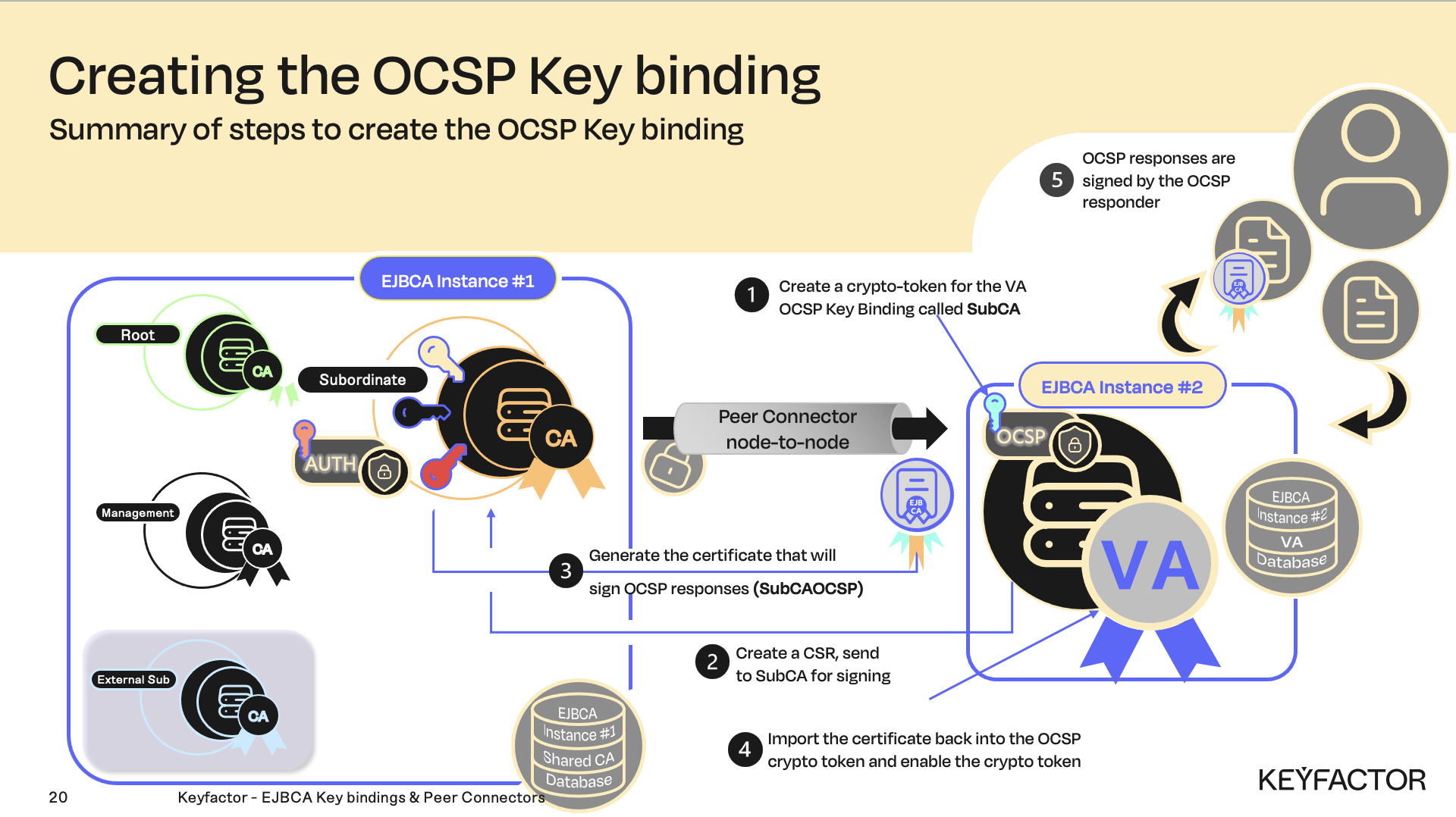
Steps required to create a designated signing key on the external VA
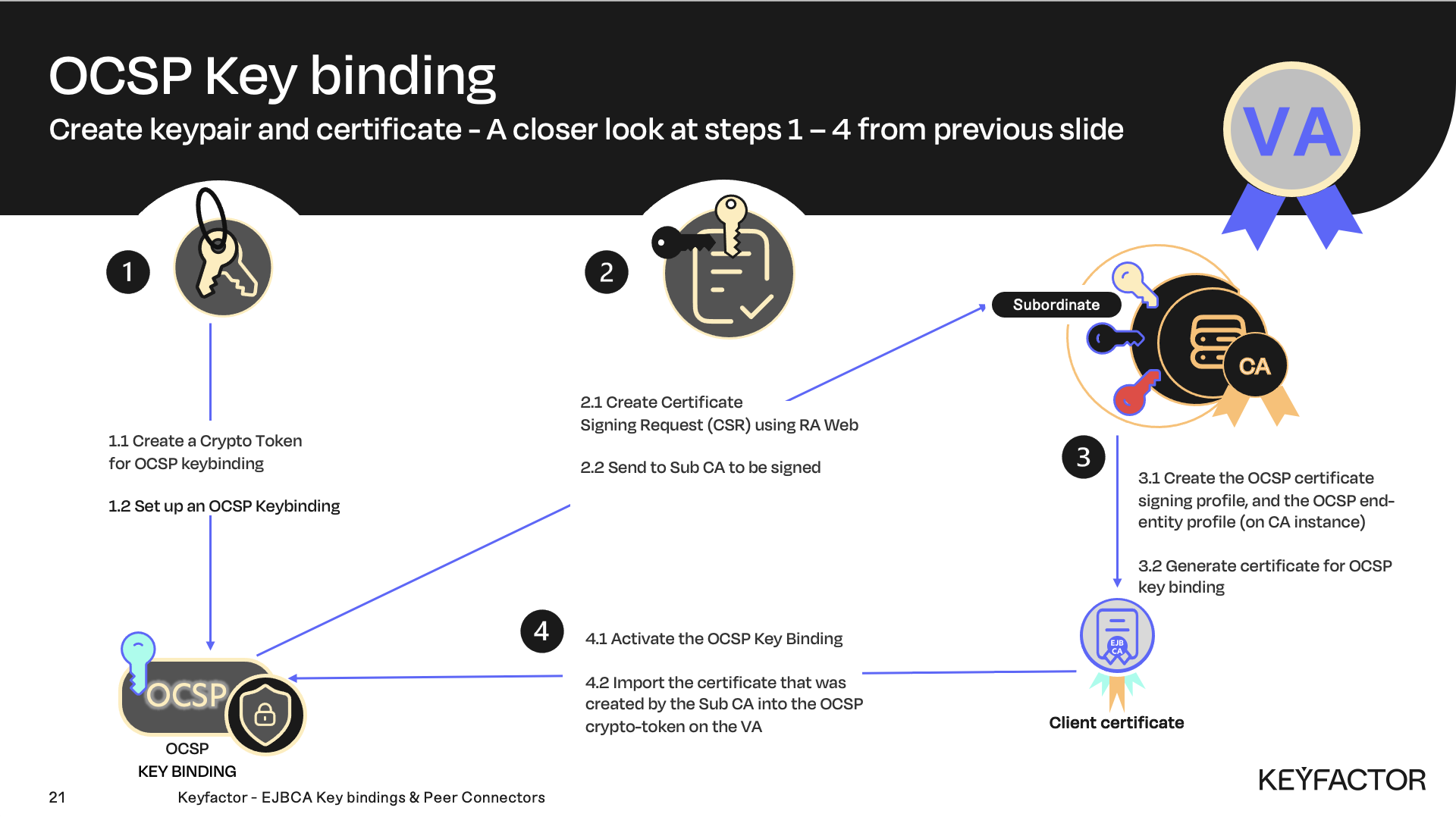
A closer look at creating the Subordinate CA’s designated signing key

Reminder you can visit the Accessing Your Environment page for details on how to connect to your Admin Web portal on your VA or CA instance(s).
This lab will jump back and forth between the CA and VA, pay particular attention to the instance you are logged into.
Create OCSP Crypto Token
Open a browser and access the Admin Web Portal on your VA
Click CA Functions >> Crypto Tokens
Click on the Create new... link
In the Name field, enter OCSP
In the Type list, select SOFT
Enable the Use checkbox for Auto-Activation
In the Authentication Code field, enter foo123
In the Repeat Authentication Code enter foo123
Click Save
Enter SubCAOcspKey00001 as the name for the new key, choose RSA 2048 from the list, and click Generate new key pair
Create OCSP Key Binding
Open a browser and access the Admin Web Portal on your VA
Click VA Functions >> OCSP Responders
Click on the Create new... link
In the Name field, enter SubCA
In the Crypto Token list, select OCSP
In the Key Pair Alias list, select SubCAOcspKey00001
In the Signature Algorithm list, select SHA256WithRSA
Click Create
Click Back to Overview
In the SubCA row under the Actions column click CSR
Download the SubCA.pkcs10.pem CSR

Create an OCSP Signing Certificate Profile
Open a browser and access the Admin Web Portal on your CA
Click CA Functions >> Certificate Profiles
Next to the OCSPSIGNER profile, click Clone
In the Name of New certificate profile field, enter OCSPSignerCertificateProfile
Click Create from template
Click Edit on the profile OCSPSignerCertificateProfile
In the Available key algorithms list, select RSA
In the Available bit lengths list, select 2048 bits
In the Validity field, enter 3mo
Uncheck the Basic Constraints checkbox labeled Use…
Uncheck the Subject Alternative Name checkbox labeled Use…
Uncheck the Issuer Alternative Name checkbox labeled Use…
Uncheck the LDAP DN order checkbox
Click Save
Create an OCSP Signing End Entity Profile
Click RA Functions >> End Entity Profiles
Select TLSClientEndEntityProfile
In the Add End Entity Profile field, enter OCSPSignerEndEntityProfile
Click Clone selected
Select the OCSPSignerEndEntityProfile
Click Edit End Entity Profile
In the Default Certificate profile list, select OCSPSignerCertificateProfile
In the Available Certificate Profiles box, ensure only OCSPSignerCertificateProfile is selected
In the Available CAs field, ensure Any CA is selected
In the Default Token field, ensure only User Generated is selected
In the Available Tokens field, ensure only User Generated is selected
Click Save
Issue the OCSP Certificate
Open a browser and click RA Web, from the ribbon menu across the top of page from your CA instance.
Click Enroll >> Make New Request
In the Certificate Type drop-down list, select OCSPSignerEndEntityProfile
In the CA drop-down list, select Sub CA
In the Key-pair generation selection, select Provided by user
Click Browse click Downloads and locate the CSR file that was created from the keybindings page, the file should be named SubCA.pkcs10.pem click select
In the CN, Common name field, enter SubCAOCSP
In the Username field, enter SubCAOCSP
Click Download PEM full chain
Save the file as SubCAOCSP.pem
Open a browser and access the Admin Web Portal on your VA
Click VA Functions >> OCSP Responders
To the right of Target OCSP Responder, in the list, select SubCA
To the right of Certificate, click Browse
Click Downloads locate the certificate that was downloaded in the previous section, the file should be named SubCAOCSP.pem click select
Click Import
In the SubCA row under the Actions column, click Enable
Under Set Default Responder, in the drop down list, select OCSPKeyBinding: SubCA
Click Set